The Story

The Omaha Road Comes to Hudson
Railroad service reached Hudson in the early 1870s, forever changing the community. After devastating fires destroyed earlier wooden repair facilities, the Chicago, St. Paul, Minneapolis & Omaha Railway committed to building a permanent repair complex north of downtown.
Between 1890 and 1891, more than sixty acres were transformed into a modern railroad shop complex unlike anything the region had seen. Massive brick buildings, miles of railroad track, steam power, and specialized repair departments created an industrial campus capable of rebuilding freight and passenger equipment serving the growing Midwest.
The North Hudson Shops quickly became one of the Omaha Road's most important repair facilities.
PHOTO
Railroad Shops Under Construction (1890–1891)

Building More Than Railcars
The North Hudson Shops employed generations of skilled craftsmen whose work kept the railroad moving.
Inside the complex were dedicated departments for:
• Machine Work
• Blacksmithing
• Freight Car Repair
• Passenger Car Repair
• Painting
• Upholstery
• Woodworking
• Inspection
Each railroad car moved from shop to shop as skilled tradesmen rebuilt every component before returning it to service.
The daily whistle became part of life in Hudson for decades.
PHOTO
Machine Shop — Built 1916

The Great Expansion
By 1916, rail traffic had grown dramatically.
To meet demand, the Omaha Road invested in an ambitious modernization program that added a new Machine Shop, Power House, Hand Car Repair Shop, and numerous supporting facilities.
These improvements represented the high-water mark of the North Hudson Shops.
The photographs below capture that remarkable period of growth.
PHOTO
Machine Shop
PHOTO
Construction Panorama
PHOTO
Power House

The People Behind the Railroad
The story of these buildings is ultimately the story of the people who worked here.
Hundreds of machinists, carpenters, painters, blacksmiths, upholsterers, clerks, inspectors, and laborers built careers inside these shops. Entire families depended upon the railroad, and many generations worked here before the shops closed.
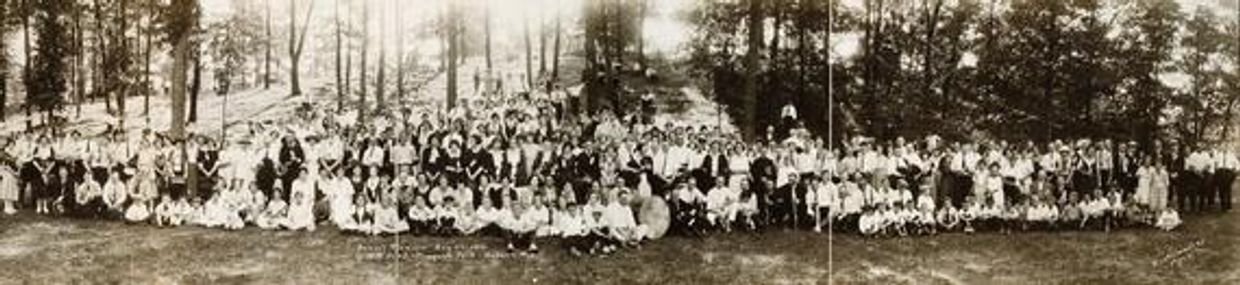
These historic panoramic photographs preserve the faces of many of those workers.
PHOTO
1916 Workforce Panorama
PHOTO
1921 Employee Picnic